
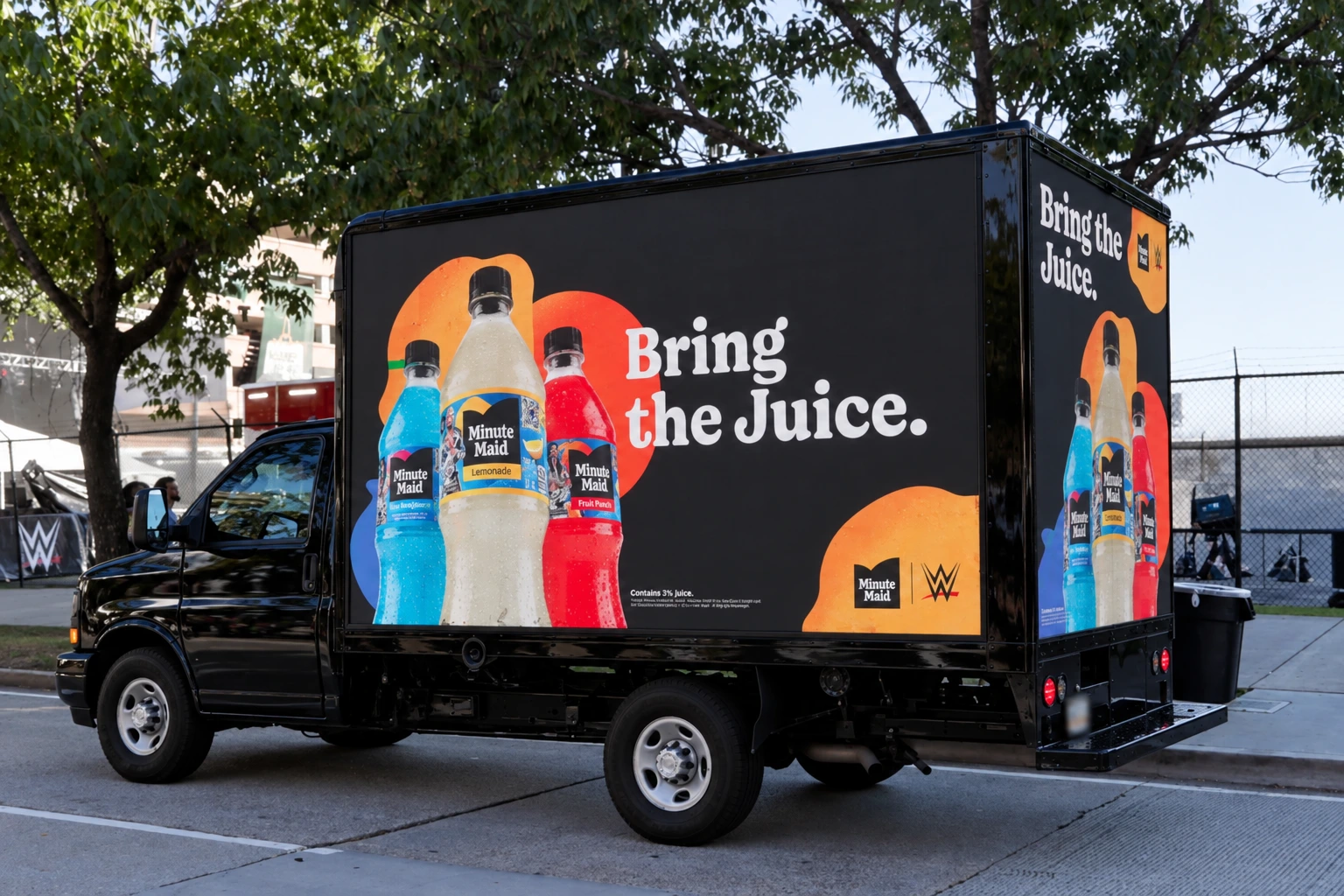
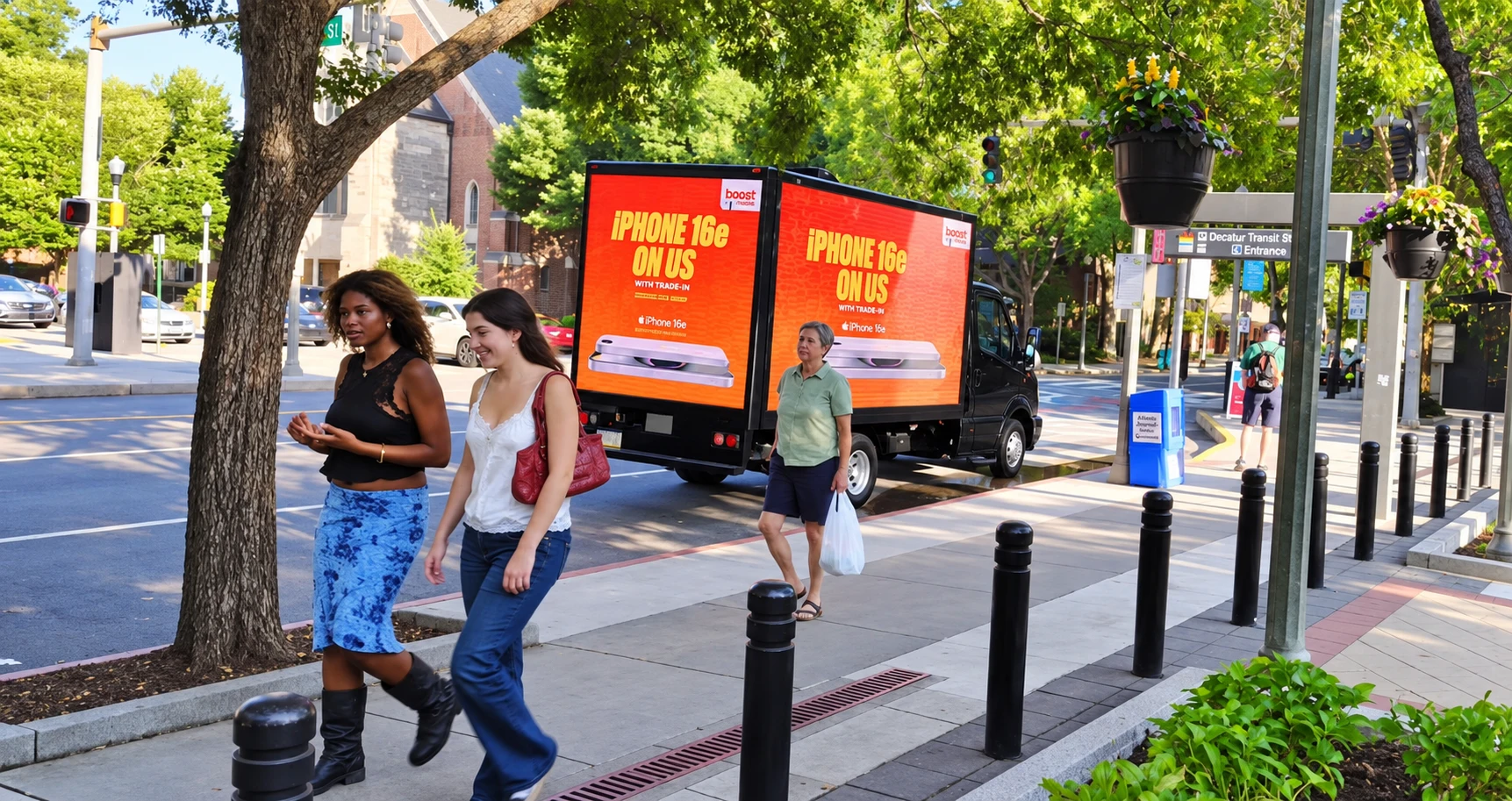
Mobile billboard advertising puts a large advertising display on a vehicle and brings it through selected areas during a planned campaign. A digital mobile billboard truck uses LED screens to show artwork that can change without printing a new sign.
For an advertiser, the important question is what the truck should accomplish: introduce a business, support an event, promote a location, recruit employees or bring attention to a message. The audience, route, schedule and creative should all support that goal.
Mobile, digital, shared or exclusive: what are you booking?
“Mobile” describes the vehicle carrying the advertisement. “Digital” describes the display. A digital billboard can be fixed beside a road, while a mobile billboard can use either a printed panel or LED screens.
| Format | How it works | What to confirm |
|---|---|---|
| Printed mobile billboard | A vehicle carries printed advertising panels. | Printing, installation, illumination and the process for changing the message. |
| Digital mobile billboard | A vehicle carries LED advertising screens. | Screen specifications, supported artwork, operating hours and creative changes. |
| Fixed roadside billboard | The display stays at a single location. | The viewing area, booking period and whether the display is printed or digital. |
Our digital mobile billboard campaigns have two booking options: Total Takeover™ exclusive campaigns and the ELITE 305 shared Miami program.
Exclusive: your brand during the booked operating hours
A dedicated truck displays your campaign without other advertisers sharing its rotation during your booked time. You can request the operating areas, hours and creative schedule that fit the assignment. Final routing depends on the market, vehicle access, traffic and operating requirements.
Shared: your advertisement within a program rotation
With shared advertising, your creative rotates with other participating businesses. The program defines its route, operating schedule and advertising allocation. It can suit a business seeking recurring visibility without reserving the entire truck. Shared truck hours and exclusive advertiser hours are different deliverables.
Build the campaign around a customer action.
Before choosing streets or artwork, finish this sentence: “We want this audience to take this action during this period.” A clear answer makes the rest of the plan easier.
For a grand opening: connect the message to the location
A restaurant or store opening needs a recognizable brand, a clear location and a reason to visit. Keep the requested operating area relevant to the business. Covering a much larger area can consume time without helping customers understand where to go.
For a convention: make the next stop obvious
An exhibitor may want attendees to visit a booth, book a demonstration or attend an evening gathering. Put that destination in the creative. Consider separate arrival and departure windows rather than treating the entire event day as one audience moment. Our convention advertising guide explains the planning details.
For recruitment or community outreach: offer one useful resource
A recruitment campaign should make the role or opportunity and application destination clear. An awareness campaign should give people a resource they can remember. These campaigns need different wording, routes and response measures from a short-term retail offer.
A useful route is more than a list of busy streets.
Start with where the intended audience has a reason to be. Then consider when the message is relevant, where the truck can operate and how much time is available. A long list of neighborhoods is not automatically a stronger campaign.
For example, a Miami request might prioritize Brickell business activity or a Wynwood entertainment promotion. An Atlanta convention request might focus on the relevant show area and attendee windows. Each needs its own brief. Explore the Miami, Atlanta and Dallas guides for local planning ideas.
As an illustrative eight-hour brief, a business could request two hours around morning activity, three around a daytime destination and three around an evening occasion. That is an allocation example, not a confirmed route. The operating plan must account for the actual audience, travel, closures, staging and available truck.
A venue name is an audience reference. It does not include access to private property, a parking position beside the entrance or event sponsorship. Confirm those details separately before building the campaign around them.
What does digital mobile billboard advertising cost?
Our exclusive campaign starting prices are below. Each price is for one truck. Final pricing depends on the market, dates, route, availability and campaign requirements.
| Package | Starting price | Operating schedule |
|---|---|---|
| Daily | $1,000 | One day, eight operating hours. |
| Weekly | $5,000 | Five consecutive days, eight hours per day: 40 total hours. |
| Monthly | $18,000 | 20 consecutive days, eight hours per day: 160 total hours. |
The weekly and monthly packages require consecutive days. A different operating schedule, additional trucks, creative services or special activation requirements should be quoted for the actual scope. See the full pricing guide before comparing proposals.
ELITE 305 is a separate shared Miami program
ELITE 305 starts at $700 per week, billed every four weeks at $2,800. It is limited to 16 advertisers, with one advertiser per business category. The shared program combines the Miami truck route, weekend street-team activity and an advertiser page.
The truck operates approximately 40 hours weekly, with advertisements rotating through the program. That does not give each advertiser 40 hours of uninterrupted display time. Review ELITE 305 availability and program details for the creative allocation and commitments.
Give people a message they can understand quickly.
Use one main idea, a recognizable brand and a clear next step. A simple offer with a readable destination usually communicates more clearly than a screen filled with service lists, small text and several phone numbers.
For example, “Visit us at Booth 214” gives a convention audience a concrete action. A recruitment message might highlight the role and a short application address. A restaurant can lead with the offer and location. These are illustrative copy ideas, not examples of verified campaign results.
Prepare artwork for the assigned truck’s actual screen dimensions and supported formats. Confirm the creative-change schedule before promising different messages throughout the day. Our LED truck creative guide covers the essentials.
Measure delivery and response separately.
Campaign reporting becomes more useful when everyone agrees on what each measurement means.
- Delivery documentation: GPS route records, operating confirmations and campaign photographs can document where and when the truck operated and what creative was displayed.
- Tracked response: a campaign-specific landing page, short URL, QR destination, phone number or offer code can help identify visits and inquiries associated with the promotion.
- Business outcomes: compare relevant inquiries, applications, bookings or sales with the campaign period and other marketing activity. A change in results does not by itself prove the truck caused it.
GPS records do not count individual viewers. A QR scan does not measure everyone who saw the screen, and an estimated impression count is not the same as verified sales. If an audience estimate is included, ask how it was calculated.
QR codes are most useful when people can engage safely, such as pedestrians or people who are stopped. Include a readable alternative, and never ask a driver to scan while moving. Read our QR code guide for response-planning ideas.
When is a truck campaign a good fit?
Consider this format when the audience is tied to a particular operating area, occasion or campaign window, and the message can be understood quickly. Store openings, exhibitions, entertainment promotions, recruitment and public-awareness efforts can all have a clear reason to use a truck.
For a complex offer that needs several minutes of explanation, use the screen to introduce one benefit and send interested people to a fuller resource. If you need coverage in several places at the same time, ask about a coordinated multi-truck campaign; one vehicle cannot operate in two districts simultaneously.
Questions to ask before booking
Can I choose the route?
You can request priority areas and audience windows for an exclusive campaign. The final operating plan is reviewed for feasibility and local conditions. A shared program follows its program schedule.
Can a truck advertise anywhere?
Do not assume that a public street, venue approach or parking area is available for advertising operations. Vehicle access, stopping, staging, display use and other requirements need review for the market and campaign.
How quickly can we launch?
Share your desired dates and artwork status. Truck availability, route planning, creative approval and the booking process determine the feasible start date. Confirm launch timing before announcing it.
Are sound, livestreaming or mobile retargeting included?
Ask about these separately. Equipment, availability, permissions and scope vary. Booking an LED truck does not automatically include audio, a livestream setup, geofencing or ads served to mobile phones.
Send a brief that can turn into a useful quote.
- Your city or cities and preferred campaign dates.
- The audience and the action you want them to take.
- Requested districts, venues or business destinations.
- Operating hours and number of trucks, if known.
- Exclusive campaign or shared Miami program preference.
- Artwork status, creative needs and reporting requirements.
You do not need a finished route map to start. Share the business goal and the details you know. The Digital Mobile Billboard Company can review availability and help scope a practical campaign.
Tell us where you want to be seen, when you want to run and what you want people to do next.
Get a Free Quote